


My Journey: Immigrant Challenges to MFT
Updated: 1 hour ago
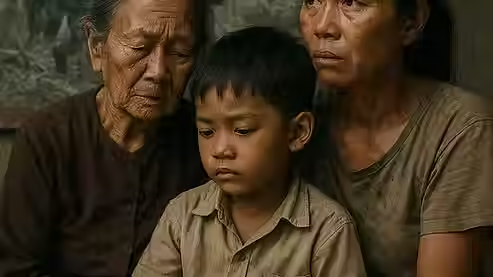
Raised by a “handicapped,” single mother who immigrated to America from Vietnam speaking no English, I was presented almost from day one with multiple levels of challenges to face alongside and in support of my mother. What has been my guiding light for some time now is mental health and the power of therapy, healing of oneself in preparation for helping others as well. Optimistic and happy by nature, I dearly love my mother and I heartily adopted the cause of struggle, by her side, for us to have something within time in this new land, a livelihood, financial security, etc. Despite the difficult nature of our circumstance and the way that my mother’s disability required special effort in many areas, now, with the value of hindsight, I look back on those early years as a time of relative bliss compared to what followed after the day that my dad decided to leave for “work” one day never to be seen or heard from again. Especially on a psychological level, that was the real game changer for me in my early childhood. I am convinced that my father abandoned his family to start another, leaving a scar that runs deep in my heart, and from which I have spent my life so far in recovery. As a result of my soul-searching throughout early adulthood, casting about and examining career options, my heart has settled on the goal of becoming a Marriage and Family Therapist. I am applying to the MS Program in Marriage and Family Therapy at Capella University.
Always a good student, my teachers suggested that I could grow up to become anything that I wanted, with the sky the limit. Early on, however, I found nothing else as exciting as reading about human behavior. My salvation turned out to be Psychology, even before I learned what that word meant. At first, I searched for what I thought to be reasons why life was a struggle with most limited options, and what might be about it. On top of a partially disabled mother who required a lot of my energy, and an absent father who left me wondering for years what it was that I did to cause him to leave me, I carried the immigrant baggage of someone whose mother still speaks very little English. Asian immigrants in general, face multi-generational adjustments that require great resiliency and determination, in order to build sustainable, secure, fulfilling lives in America.
Mental illness ravaged my family like the plague. The most certain thing for me growing up was that more disaster would follow. I was forced to deal with loss after loss of a family member and I grew up fast, reflecting constantly, and struggling to understand why; not only understand loss, but also how and why people respond as they do to that loss. Four of my cousins/uncles died – alcoholism, heroin overdose, motorcycle crash, and suicide – each time I retreated inside to ask myself why. I came back from each self-consultation determined to pick up the pieces and proceed in a positive fashion. This determination to put a positive spin on reality and march forward resolutely, within time, came to provide me with a sense of professional destiny as a mental health counselor. As my thinking matured and I began to focus on the fundamental role family plays in mental health, I began to imagine myself as a distinguished MFT professional, which really makes me smile and fills me with joy and happiness.
Becoming a professional counselor is a natural career choice for me, as this area plays well to my primary gifts, being a good listener, patient, compassionate, understanding, and empathetic towards others, some of the qualities that I see as of central importance for the professional counselor. I have trained my mind and ear over the course of years to help my mother and I to navigate our emotions and thoughts. Our family’s battles have long been my principal source of motivation, fueling my passion for helping others still further.
It is very common for Vietnamese immigrants in America to face mental health issues such as PTSD and other war-related trauma from the aftermath of the Vietnam War. I grew up hearing stories about my family fleeing from their villages and homes leaving everything behind to seek freedom. Sounds of painful cries, gunshots and screams have lived on in our collective memory, with the stories passed down from one generation to another. I was so small when I came to America that I do not even remember Vietnam. The country has always existed only in my mind and imagination. I hear the screams of the war in the memories of elderly people, and the stories that continue to be told by their children and grandchildren. A young Vietnamese woman who has not yet had the opportunity of crossing the Pacific to visit my homeland, I want to develop a special focus as a mental health worker on helping to heal the lingering wounds of the Vietnam war. I look forward to the expert guidance of the faculty at Capella, in my preparation for this lifetime mission. Most of all, while I do hope to contribute to our understanding and progress at addressing the issues of mental health in our older citizens, I am most concerned with the way that the war in Vietnam has contributed to a type of PTSD that is multigenerational in its effects.
I find that talking about the war with Vietnamese people who have made the USA their permanent home, realizing and working through the pain and suffering endured by their parents and grandparents in the homeland, helps to resolve issues in their present day lives, helping them to place greater value on family life, peace, reconciliation, and harmony.
I am continuing in my present position in at the service of my community as an active mental health advocate and health educator with the National Council of Alcoholism and Drug Dependence of Orange County, a nonprofit organization. I am also part of a county and federally funded program called Connect-OC, as well as the South Orange County Coalition.
Vietnamese are quick to deny having any mental health related issues, tending to stigmatize mental illness as are many relatively recent immigrants to America. Mental health literacy is still pretty much a foreign language to most Vietnamese-Americans, older ones in particular, many of whom also face language barriers. My mom has been a US Citizen for over 30 years and is only able to answer yes/no questions in English.
I am highly motivated in the pursuit of a career in Marriage and Family Therapy so that I will have the enormous privilege of providing cultural and linguistically competent counseling services with a special focus on the needs of the Vietnamese-American community.
Thank you for considering my application.
My Journey Immigrant Challenges to MFT


Your narrative already carries tremendous emotional weight, but when shaped into a cohesive prose review, its power becomes even more striking. What emerges is the portrait of someone who has been forged—rather than merely influenced—by adversity, and who has transformed that adversity into purpose with remarkable clarity.
The story begins with a childhood marked by dual forms of displacement: immigration and abandonment. Your mother’s journey from Vietnam to the United States without English, compounded by her disability, sets the stage for a childhood in which you were both daughter and caretaker. Yet the tone you convey is not one of bitterness but of fierce loyalty and tenderness. That early optimism you describe becomes a kind of emotional throughline, a quiet…